


Vacant Properties in Saudi Arabia: Fees, Conditions, and Key Differences from White Land Fees

What Are Vacant Properties?
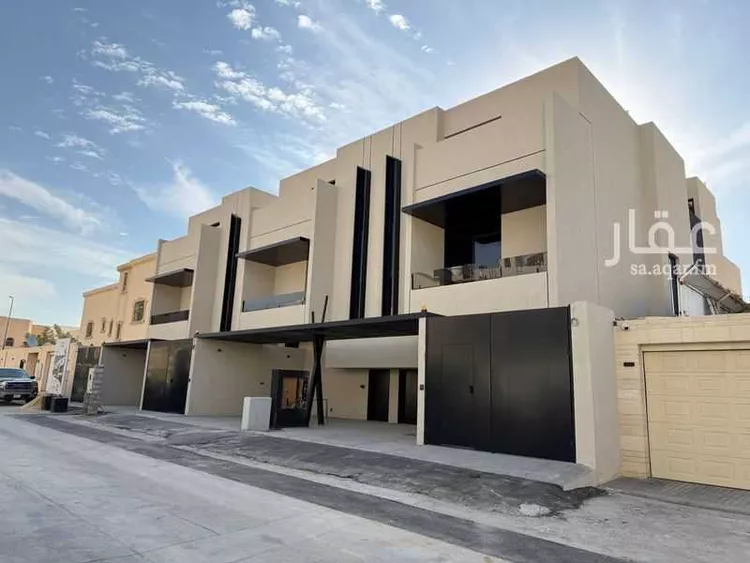
Vacant properties are buildings located within the urban boundary that remain unused for a long period without an acceptable justification, whether by not being inhabited or by not being operated and utilized in the usual way. This does not refer to a property that is temporarily empty due to a passing circumstance, but rather to a property that remains out of actual use in a way that limits its role in meeting market needs. The decision aims to achieve real estate balance, and its regulation became part of the White Land Fees and Vacant Properties system after the amendment was approved on April 29, 2025, and then published in Umm Al-Qura Gazette on May 12, 2025.
How Much Are Vacant Property Fees?
The fees are tied to the property’s location and the level of demand for it. They range from 1% to 5% of the equivalent rent value, provided that they do not exceed 5% of the building’s value in all cases.
How Are the Zones and Neighborhoods Covered by Vacant Property Fees Determined?
Vacant property fees are not applied at the same rate across all locations. They vary depending on the strength of demand in the neighborhood and the property’s position within the city. The annual fee is calculated as a percentage of the equivalent rent value, with a maximum cap of 5% of the building’s value. The more attractive the property’s location is and the higher the demand for it, the higher the cost of leaving it vacant becomes. These are the main tiers.
First Tier: Top Priority with an Expected Range Between 4% and 5%
This tier includes the highest-demand neighborhoods in Riyadh, so it is expected to carry the highest rate. This matters especially to property owners, because leaving a property vacant in these locations may be more costly and less practical.
- North Riyadh: Al Malqa, Hittin, Al Nakheel, Al Khuzama, Al Narjis, Al Arid, Al Qirawan, Al Yasmin, Al Sahafa, Al Aqiq, Al Ghadeer, Al Nafil, Al Falah, Al Taawun.
- Central Riyadh: Al Olaya, Al Sulaymaniyah, Al Rahmaniyah.
Second Tier: High Priority with an Expected Range Between 3% and 4%
This category includes neighborhoods with strong demand, though one level below the first tier. It matters to both owners and investors because a vacant property here is still in an active location, which makes operating it or offering it to the market a more logical choice.
- Al Munsiyah.
- Qurtubah.
- Neighborhoods located along Prince Mohammed bin Salman Road.
Third Tier: Medium Priority with an Expected Range Between 2% and 3%
This tier includes neighborhoods with good demand, though at a lower level than the highest-ranked areas. This information also matters to buyers and families, because it highlights neighborhoods that may combine a suitable location with relatively lower costs.
- East Riyadh: Al Rawdah, Al Rayyan, Granada, Al Yarmouk, Al Naseem East and West, Ishbiliyah, Al Hamra, Al Salam.
- West Riyadh: Al Mahdiyah, Tuwaiq, Dhahrat Laban, Irqah.
Fourth Tier: Low Priority with an Expected Range Between 1% and 2.5%
These neighborhoods face less pressure in terms of demand, which is why they fall into a lower tier. Even so, they are still within the scope of the expected fees. This matters to owners who assume that lower demand means vacancy has no financial impact.
- Al Shifa.
- Al Aziziyah.
- Al Hazm.
- Namar.
- Dahiyat Namar.
- Tuwaiq.
- Okaz.
- Al Awali.
- Al Rimal.
- Oraidh.
- Al Janadriyah.
- Al Nadhim.
- Dirab.
- Part of Al Khair Plan.
Fifth Tier: Currently Outside the Geographic or Urban Scope at 0%
This category includes neighborhoods or parts that are not currently covered within the calculation scope. Its importance lies in showing that some locations are not included at the moment, but that does not necessarily mean they will remain outside the classification in the future.
- The rest of the neighborhoods.
- Parts of Al Khair plans.
- East Riyadh grants currently not included.
Conditions for Applying Vacant Property Fees
Applying vacant property fees does not depend solely on the property being empty. It is linked to a set of criteria that determine when a building is actually considered within the fee scope. These conditions matter to the owner because they help clarify whether the property is subject to the fees and on what basis that assessment is made.
- The building’s use must fall within the uses covered by the decision.
- The property must be located within the officially announced area where the fee applies.
- The building must be ready for occupancy or meet the requirements for issuing an occupancy certificate, depending on its type and location within the city.
- The property must not meet the minimum threshold for consumption of services and utilities associated with its type of use.
- The building must remain unused or unutilized for six months, whether continuously or intermittently, with the possibility of adjusting this period by an official decision.
- The number of vacant properties owned by the liable party within the application area must not be less than the minimum threshold stated in the decision.
What Is the Difference Between Vacant Properties and White Land Fees?
Vacant properties refer to existing buildings that are not being used, while white lands refer to undeveloped land within the urban boundary. The first addresses idle buildings, while the second addresses delays in land development.
In terms of fees, white land fees are imposed at 2.5% annually, with a cap that does not exceed 10%. Vacant property fees, on the other hand, are an annual fee of no more than 5% of the property’s value, and they may be increased to 10% with the approval of the Council of Ministers.