



Marble Alternative Guide: Walls, Kitchens, Bathrooms, and Costs
 بدر الحسني | Bader Al Hassany4 min read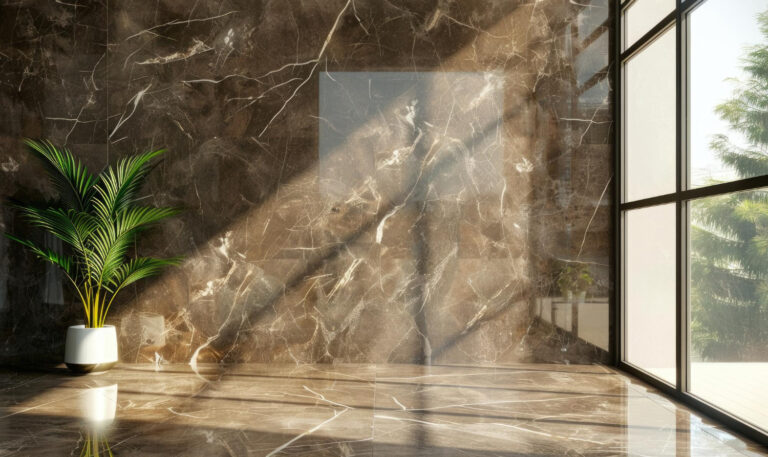
Marble Alternative: A Comprehensive Guide
A marble alternative is a modern finishing material used to replicate the appearance of natural marble while offering different characteristics in terms of weight, installation, and cost. The use of marble alternatives in residential and commercial projects is based on their practicality for covering walls and surfaces without the need for heavy natural stone. Marble alternatives have become increasingly common in recent years in kitchens, bathrooms, interior walls, and occasionally in light-use flooring applications.
What Is a Marble Alternative?
A marble alternative consists of industrial panels typically made from PVC or polymer blends, with treated surface layers that simulate the look of marble. Panel thickness and dimensions vary depending on the manufacturer and intended use.
Compared to natural marble, marble alternatives are lighter and easier to install, but they differ in durability and overall lifespan.
For comparison with natural marble and its types, see:
Types and Uses of Marble Alternatives
Marble Alternative for Walls
Marble alternatives are commonly used on interior walls in living rooms, corridors, and bedrooms. They provide a decorative appearance without adding significant structural load. Installation is usually done using special adhesives or lightweight fixing systems.
Marble Alternative for Kitchens
In kitchens, marble alternatives are typically used for backsplashes rather than countertops, due to their limited resistance to high heat compared to natural marble or quartz.
Marble Alternative for Bathrooms
Marble alternatives are widely used in bathrooms because they are relatively easy to clean and offer moderate moisture resistance when installed correctly. Wall applications are generally preferred over flooring.
Marble Alternative for Flooring
Using marble alternatives for flooring is less common and usually limited to low-traffic areas. They are not recommended for high-traffic zones compared to ceramic tiles or natural stone.
Marble Alternative Panels
Marble alternative panels come in various sizes, with large-format panels being the most common to reduce visible joints. Typical thickness ranges from 2 mm to 5 mm.
The following table summarizes general characteristics:
| Property | Description |
|---|---|
| Weight | Lightweight compared to natural marble |
| Thickness | 2 to 5 mm |
| Installation | Adhesive or direct fixing |
| Joints | Fewer than ceramic tiles |
| Maintenance | Relatively easy cleaning |
Marble Alternative Prices
Marble alternative prices vary based on:
- Material type
- Thickness
- Panel size
- Print and surface finish quality
- Country of manufacture
On average, the price per square meter ranges between 60 and 150 SAR, depending on market conditions and supplier.
Compared to natural marble, the difference is clear in both material cost and installation ease.
Disadvantages of Marble Alternatives
Practical Disadvantages
The disadvantages of marble alternatives should be considered before selection. The most notable include:
- Low heat resistance: Can be affected by direct heat in kitchens.
- Scratch susceptibility: Less resistant to scratches than natural marble.
- Shorter lifespan: Depends on material quality and installation.
- Limited flooring use: Not suitable for high-traffic areas.
- Appearance degradation over time: Especially with prolonged exposure to moisture or sunlight.
Comparing these drawbacks with natural marble properties helps determine suitability by use case.
Quick Comparison: Marble Alternative vs Natural Marble
| Aspect | Marble Alternative | Natural Marble |
|---|---|---|
| Weight | Lightweight | Heavy |
| Cost | Lower | Higher |
| Installation | Easier | Requires preparation |
| Durability | Moderate | High |
| Lifespan | Shorter | Longer |
Using Marble Alternatives in Interior Design
Marble alternatives are commonly used in modern interior design solutions, particularly in mid-budget residential projects. Similar ideas and finishes can be explored through:
Conclusion
Marble alternatives represent a practical finishing option for specific applications, especially walls and low-load areas. Quality and pricing vary by material and manufacturing, and the disadvantages of marble alternatives make them unsuitable for all uses when compared to natural marble. Selecting a marble alternative depends on understanding its properties, limitations, and the intended application.
For more real estate and interior design content: Aqar Blog
For brief updates on X: Aqar on X
Frequently Asked Questions
What is a marble alternative?
A marble alternative is an industrial panel designed to replicate the look of natural marble for interior finishing applications.
What are the disadvantages of marble alternative panels?
Key disadvantages include low heat resistance, susceptibility to scratches, and a shorter lifespan compared to natural marble.
What is the price per square meter of marble alternatives?
Prices typically range between 60 and 150 SAR per square meter, depending on quality and size.
Is a marble alternative moisture-resistant?
Marble alternatives offer relative moisture resistance when properly installed, but they are not fully waterproof without additional treatment.
Is a marble alternative suitable for kitchens?
It is suitable for backsplashes but not recommended for countertops due to heat exposure.
Is a marble alternative suitable for bathrooms?
It is commonly used on bathroom walls when installed correctly.
Can marble alternatives be used for flooring?
They can be used in low-traffic areas but are not suitable for heavy-use spaces.
What is the difference between marble alternatives and natural marble?
The main differences lie in weight, cost, durability, and lifespan.
Do marble alternatives require special maintenance?
No special maintenance is required; regular cleaning with non-abrasive materials is sufficient.
Do marble alternatives change color over time?
Color changes may occur with prolonged exposure to sunlight or high moisture levels.
**
- **
- **
**
**
**
**
**
**
**
**
**
**
**
**
**
**
**