


Visiting Mecca: Hajj, Culture, and History

Visiting Mecca: Hajj, Culture, and History
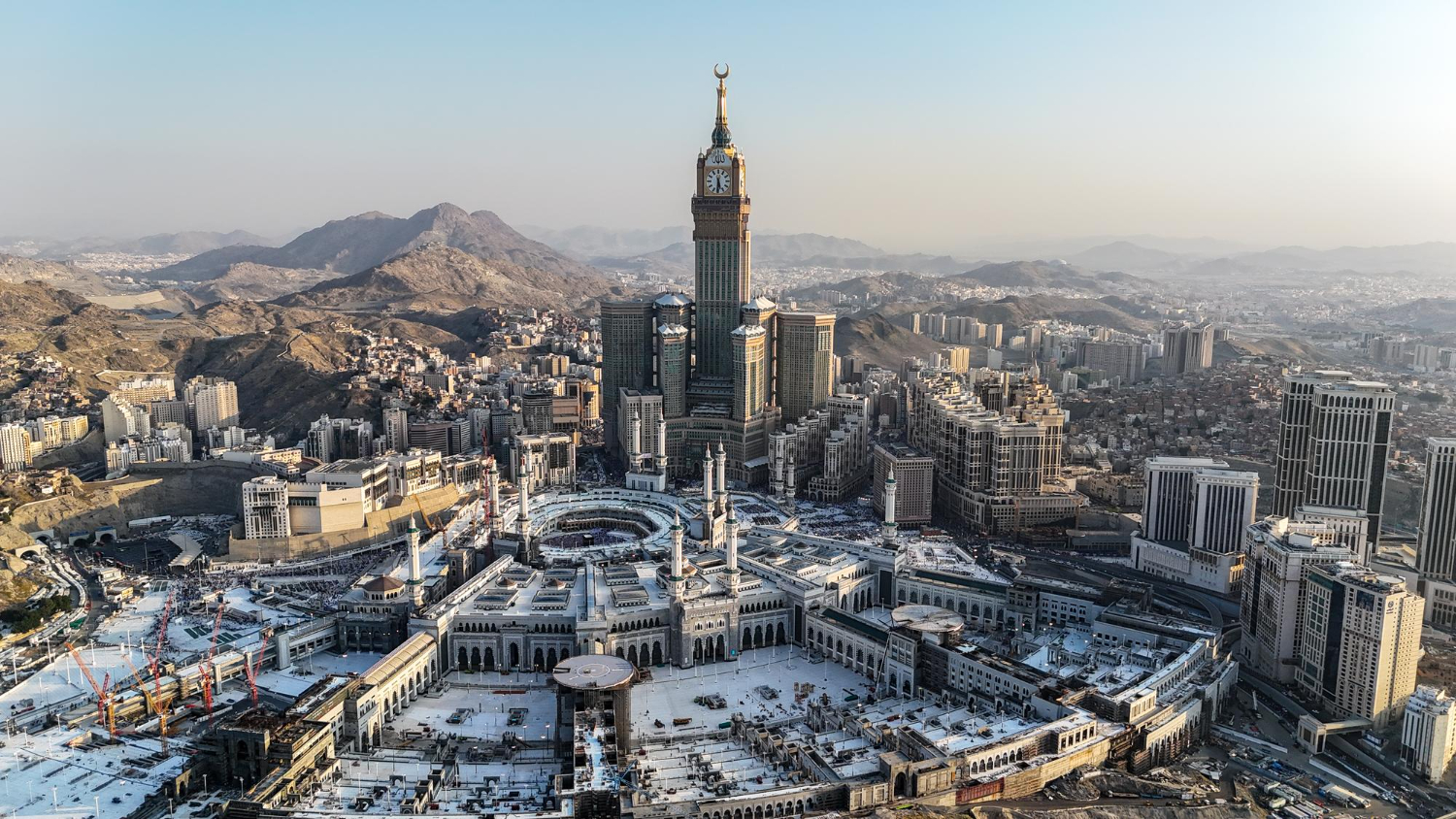
Mecca is one of the prominent cities in Saudi Arabia, holding not only religious significance but also cultural and historical importance in the Saudi consciousness. It marks the beginning that laid the foundation for the Saudi kingdom to become what it is today.
Religiously, Mecca is the Qibla of Muslims, which, in addition to the daily prayers obligatory for Muslims, millions of believers from all around the world travel there annually to perform the rituals of Hajj and Umrah. Its ancient history reflects the development of Islamic civilization and the deep connections between religion and culture in this sacred city. Every corner of Mecca carries a story from the past, and every landmark holds historical and religious significance.
In this article, we will take you on a journey through the most prominent landmarks of Mecca, explore its rich history spanning centuries, and delve into the local culture that distinguishes it.
The Ancient History of Mecca
Mecca has a rich and ancient history, with many books dedicated to recounting this history. It is said that Mecca was named either because of its scarcity of water or because it “removes sins.” It is believed to have been a place where tribes lived since ancient times, where people would migrate to and settle before the time of Prophet Ibrahim (Abraham). They would write down their experiences and keep track of different parts of their life, but it’s hard to say for sure that anything they wrote was true. But even if some religious stories claim that people lived in Mecca before Ibrahim and geological studies show that the country was fertile in the past, it was Ibrahim and Ismail’s migration that really founded Mecca.
In the story of the descent of Ibrahim and Ismail, it is narrated that Ibrahim (peace be upon him) left his wife, Hajar, and his son, Ismail, in Mecca by God’s command. The Qur’an speaks of the immense hardship Ibrahim faced in his prayer when he said, “Our Lord, I have settled some of my descendants in a valley without cultivation, near Your Sacred House. Our Lord, that they may establish prayer. So make hearts among the people incline toward them and provide for them from the fruits that they may be grateful.” (Quran 14:37). When Hajar feared for her son, she began running between Safa and Marwah until the Zamzam well sprang forth. It is said that a tribe called Jurhum lived near Mecca, and upon learning of the well, they requested to move their homes to the area, where they embraced Ismail (peace be upon him). After Ismail grew up, Ibrahim returned to check on him and inform him of God’s command to raise the foundations of the ancient house, the Ka’aba.
For hundreds of years, many clans ruled Mecca. It wasn’t until Hashim ibn Abd Manaf of the Quraysh tribe took over the job of giving water to pilgrims that things changed. He was in charge of Mecca’s religious and business operations. He was one of the most important people who helped Quraysh stay important socially and economically. He set up commerce caravans that went through Mecca and gave pilgrims food and drink throughout the Hajj season. After Hashim died, his sons took up the job and kept Mecca’s religious and commercial importance alive.
From Hashim’s lineage came the Prophet Muhammad (peace be upon him), who was born and raised in Mecca (which was already a religious and commercial center at that time), started calling people to a new monothiest religion called Islam. the Islamic call spread, but the Prophet migrated to Medina in 622 CE to protect it from persecution by the Quraysh, marking a pivotal moment in Islamic history, as the first Islamic state was established there. But still, Muslims’ hearts remained attached to their Qibla, and Mecca was eventually liberated with little resistance, where Prophet Muhammad (peace be upon him) conquered Mecca with an army of Muslims and destroyed the idols that were worshipped in the Kaaba, purging the city of polytheism.
And although Mecca’s religious significance is paramount, it was also a vital commercial center. Historical records show that Mecca was an active trading center along ancient trade routes between the Levant and Yemen. Trade caravans passed through the city, making it an important commercial station benefiting the tribes that inhabited it.
In the 20th century, the Kingdom of Saudi Arabia took over the management of Mecca after the establishment of the modern state under the leadership of King Abdulaziz Al Saud in 1932. Since then, Mecca has witnessed significant infrastructure developments, including hotel construction and the expansion of the Haram Mosque to accommodate the growing number of pilgrims.
Meccan Culture: Rituals and Customs
Due to its long history and the various tribes that have inhabited it, Mecca has developed a rich and diverse cultural fabric. One of the most prominent customs in Mecca is hospitality, where visitors from all over the world are welcomed with warmth and respect. Meccan families are also known for their holiday celebrations, during which they host large feasts that bring family and friends together. These gatherings provide an opportunity to exchange stories and foster communication between generations. Another unique custom is the transmission of oral traditions, in which elders share stories and customs with younger generations, helping preserve Meccan heritage.
Meccan cuisine is also an integral part of daily customs, with dishes like Hanini and Maqlaqal, as well as the frequent serving of Arabic coffee at family gatherings.
Top Cultural Activities in Mecca
Mecca is a cultural destination rich with activities for visitors, including visits to historical and religious landmarks such as the Haram Mosque and the Kaaba, as well as the Cave of Hira and Mount Arafat. Visitors can also learn about its history at the Mecca Museum, which features exhibits that narrate Mecca’s Islamic and cultural history.
In addition, Mecca’s cultural festivals provide a wonderful opportunity to explore diverse aspects of the local culture. For instance, the Mecca Cultural Festival offers artistic performances, musical shows, and cultural seminars that highlight Meccan heritage. Traditional markets like Souq Al-Atibiya and Souq Al-Hijaz offer visitors a unique opportunity to discover traditional Meccan products, including dates, perfumes, and traditional clothing.
Hajj: Worship and Spiritual Experience
Hajj is one of the five pillars of Islam and a unique spiritual journey and worship experience in a Muslim’s life. Muslims from all around the world converge to perform rituals that begin on the 8th of Dhul-Hijjah and end on Eid al-Adha. This journey is not only about performing religious rituals but also a spiritual experience aimed at renewing faith and drawing closer to Allah.
During the Hajj, Muslims perform Tawaf around the Kaaba, walk between Safa and Marwah, and stand at Arafat. Standing at Arafat is the most significant spiritual moment, as Muslims raise their hands to the sky in prayer for mercy and forgiveness, in an atmosphere of peace and deep reflection. From there, they proceed to Muzdalifah and then to Mina to do the ritual of stoning the Jamarat.
Spirituality in Mecca: An Unforgettable Experience
Words cannot fully convey the spiritual impact of entering Mecca, where Muslims are surrounded by an atmosphere of worship and piety. This spirituality is particularly evident during the rituals of Hajj, where Muslims reflect on the Islamic journey and its significance. At that moment, a Muslim feels as though the entire world stops around them, and they are surrounded by one Ummah performing worship in perfect harmony.
There is no doubt that Mecca offers its visitors an unforgettable experience, as they feel a deep sense of reverence and connection to Allah, making it a unique journey that remains etched in the memory of all who visit.