


Kitchen Construction Cost in Saudi Arabia: Key Factors and Estimates

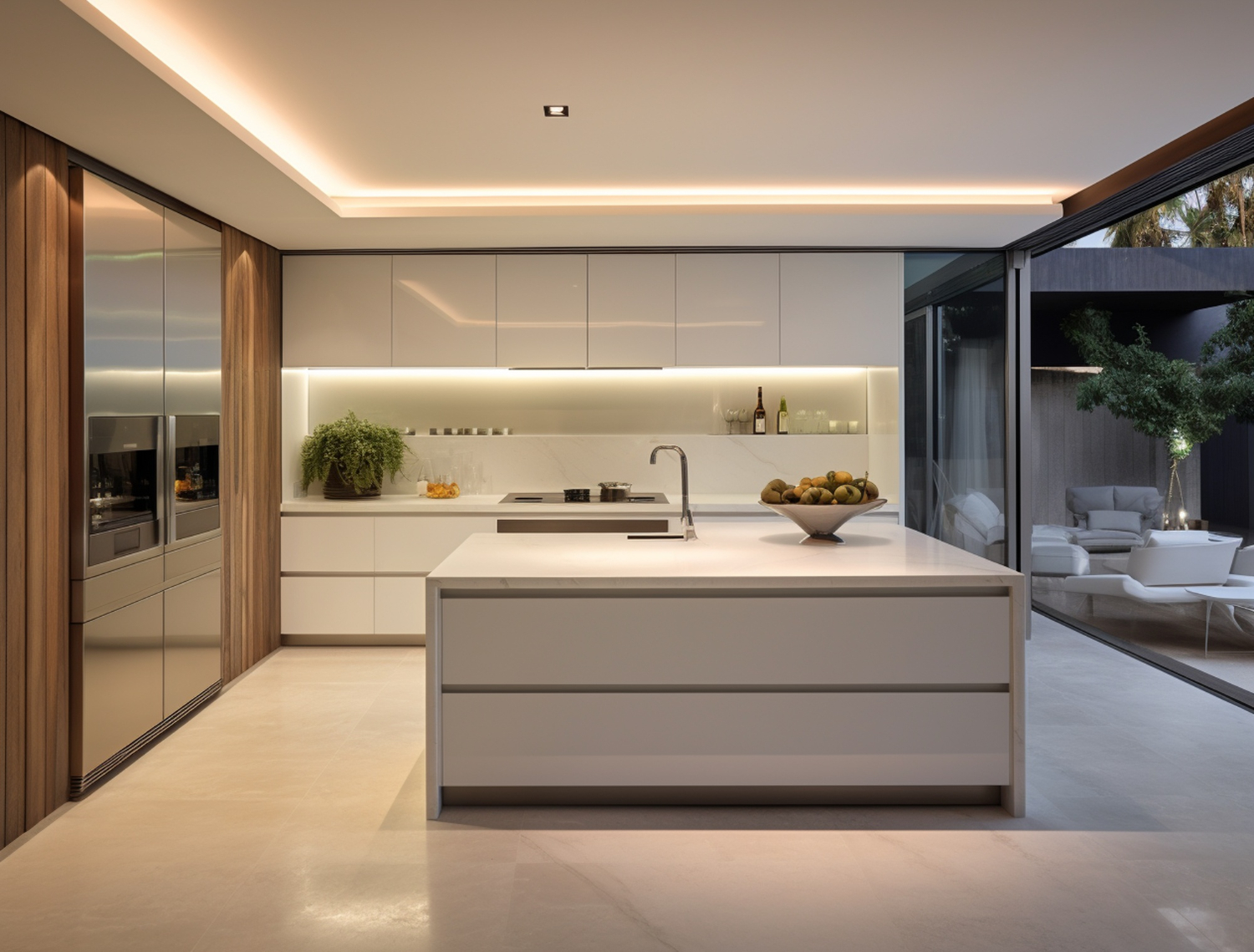
Kitchen construction cost is one of the main spending items when fitting out residential units, whether apartments or villas. The total amount is linked to several technical factors, including kitchen area, type of materials, finish level, labor costs, and the number of appliances and services connected to the kitchen. There is a clear difference between building a new kitchen in a project under construction and renovating the kitchen in an existing unit, and the parameters also change in the case of building a small kitchen compared with larger kitchens in terms of layout and the storage and work space available.
The term kitchen construction cost is used to refer to the total amount spent on plumbing and electrical services, floors and walls, ceilings, cabinets, worktops, and some additional elements such as lighting and ventilation systems. A realistic reading of the cost usually involves breaking it down into subcomponents that make it easier to compare different options in housing or renovation projects.
Factors that affect kitchen construction or renovation cost
Floor area
Floor area has a direct impact on kitchen construction cost.
In typical residential kitchens the following can be observed:
- Small kitchen: approximate area between 6–8 m²
- Medium kitchen: approximate area between 9–12 m²
- Large kitchen: area exceeding 13 m²
An increase in floor area leads to higher quantities of tiles, longer worktops, more storage cabinets, and a larger ceiling area that needs finishing, which raises the overall cost. When the kitchen is renovated, area becomes even more important if the project includes a change in the layout or opening the kitchen to the living room.
Materials
The type of materials used is one of the most influential elements in kitchen construction cost. The main materials include:
- Cabinet materials (MDF, solid wood, ready-made panels)
- Worktops (granite, natural marble, engineered marble, quartz)
- Floor and wall tiles (ceramic, porcelain, natural stone)
Price per square meter differs from one material to another, as does each material’s resistance to heat and humidity.
Additional finishes
A number of elements fall under the heading of additional finishes, including:
- Suspended ceilings and gypsum board
- Cornices and gypsum decorations
- Glass on cabinet fronts
- Open shelves and decorative units
- Various kitchen lighting systems
Each additional element increases part of the cost, especially in kitchen renovation projects that move from a simple finish to a finish with a higher level of detail.
Labor
Labor is a constant component in calculating kitchen construction cost. It includes:
- Plumbing and drainage works
- Electrical works and connections
- Tiling and installation of ceramic or porcelain
- Installation of cabinets and stone tops
- Ceiling and painting works
Labor rates vary from one region to another, and also between lump-sum contracts with a single contractor and projects where the work is split between several teams.
Appliances and equipment
Appliances are not part of the direct structural works, but they are part of the overall picture of kitchen construction or renovation cost. They include:
- The oven or oven with cooktop
- The refrigerator
- The hood or exhaust fan
- The dishwasher, where present
In kitchen renovation projects, some appliances may remain in place to reduce cost, while in other projects they are completely replaced in order to achieve a unified look for the space.
Lighting and services
The number of electrical outlets, plumbing points, and gas or power points for heating appliances affects implementation cost. In new construction these points are defined in a clear plan, while redistributing them during renovation requires extra chasing and service extensions, which adds a clear cost item.
Kitchen layout (small or large kitchen construction)
Kitchen layout determines the number of units, length of worktops, and how the space is used. The article Kitchen layout plans by area presents models for distributing elements in small, medium, and large spaces. In the case of small kitchen construction, the layout often relies on a single wall or corner with greater emphasis on vertical storage, while larger spaces allow multiple options such as a central island or an attached pantry.
Estimating kitchen construction cost in Saudi Arabia
Kitchen construction cost is usually estimated using an approximate price per square meter of finishes, taking into account the required quality level. Assuming a 10 m² kitchen, three approximate scenarios can be used:
| Scenario | Finish level | Approx. price per m² (SAR) | Area (m²) | Estimated kitchen cost (SAR) |
|---|---|---|---|---|
| Economic | Basic | 900 | 10 | 9,000 |
| Mid-range | Good | 1,500 | 10 | 15,000 |
| High-end | Premium | 2,300 | 10 | 23,000 |
Economic scenario
In the economic scenario, kitchen construction cost is linked to simple, practical materials such as MDF cabinets covered with melamine, worktops made of engineered stone or economic granite, and tiles from low to mid-price ranges. This level is common in many apartments and investment projects that use basic finishes.
Mid-range scenario
At this level, slightly higher quality materials are used, such as mid-range granite or quartz worktops and cabinets with painted or better-wrapped fronts, with a wider distribution of lighting points and connections. This scenario is common in residential units that seek a balance between kitchen construction cost and longer service life for cabinets and stone tops.
High-end scenario
In the high-end scenario, kitchen construction cost increases as a result of using higher-priced materials such as natural wood or high-density MDF with soft-closing systems, worktops made of quartz or distinctive natural marble, porcelain or natural stone tiles, and multiple layers of lighting. These specifications are often implemented in villas or units with high-end finishes.
Examples of small kitchen construction cost
Estimating floor area
In the case of small kitchen construction in a medium-sized apartment, floor area in many examples ranges between 6–8 m². The layout often relies on:
- A single run of cabinets and appliances
- Or an L-shaped corner layout
- With the possibility of adding a small storage unit or breakfast corner where space allows
Reducing the floor area means lowering the quantity of tiles and stone and the number of cabinets, which is reflected in part of the execution cost.
Finishing costs in small kitchens
Some projects allocate part of the budget to higher-quality materials over a smaller area, which makes it possible to obtain a good finish within an acceptable total small kitchen construction cost. Lighting plays a clear role in this type of kitchen, through distributing enough light points to reduce the feeling of tightness in enclosed spaces.
Material and labor costs
Despite the small area, some labor items remain fixed, such as basic plumbing works and main electrical wiring, so small kitchen construction cost does not decrease in exact proportion to the reduction in area. However, the total spending on tiles, stone, and cabinets remains lower compared with larger kitchens with wider areas.
Residential projects show recurring patterns in how kitchen construction cost is handled when looking for balanced solutions between quality and overall budget, including:
- Relying on a clear distribution of the work triangle between sink, oven, and refrigerator
- Keeping plumbing and gas points as fixed as possible in kitchen renovation projects to reduce demolition work
- Combining ready-made cabinet units with custom units for corners or special architectural conditions
- Using a layout that matches the available area instead of resorting to major structural modifications
The article The kitchen work triangle provides a broader explanation of this principle in organizing residential kitchens.
Conclusion
Kitchen construction cost is influenced by a set of interconnected factors, including floor area, type of materials, additional finishes, labor costs, and the number of appliances and services. The cost range differs from one project to another depending on the required finish level and the nature of the kitchen, whether it is a new kitchen in a unit under construction, a renovated kitchen in an existing building, or a specific model of small kitchen construction in apartments. The article Calculating construction costs and stages provides a broader framework for understanding construction costs in residential projects, and kitchen cost can be placed within this overall picture as part of the total finishing budget.
Frequently asked questions
What is the average cost of building a standard-size kitchen?
Assuming a kitchen with an area of about 10 m² and depending on material and finish levels, the average kitchen construction cost can fall within an approximate range that starts from an economic level based on basic materials and extends to a high-end level with more expensive materials and higher finish quality, with figures varying by city and project type.
What are the factors that most affect kitchen renovation cost?
Kitchen renovation cost is influenced by the degree of change in the internal layout, the extent to which cabinets and worktops are replaced, the type of new tiles, and the number of electrical and plumbing points whose locations change, in addition to the level of additional finishes such as suspended ceilings and lighting systems.
Does the construction cost of a small kitchen differ from that of a large kitchen?
The cost of building a small kitchen is usually lower than that of a larger kitchen when the same material level is used, because of the reduced quantities of tiles, stone, and cabinets. However, some labor and basic service items remain similar in value, which means that the difference in cost can be smaller than the difference in floor area in some cases.
What is the difference between building a new kitchen and renovating an existing one?
Building a new kitchen is part of an integrated construction project, and its cost is added within the general finishing stages. Renovating an existing kitchen involves removing old finishes, treating walls and floors, and then installing new materials, which adds items such as demolition, removal, and repair work and can increase the portion of labor and time in the total cost.