



Old Kitchen Renovation Guide: Evaluating Damage and Modernizing Design
 بدر الحسني | Bader Al Hassany7 min read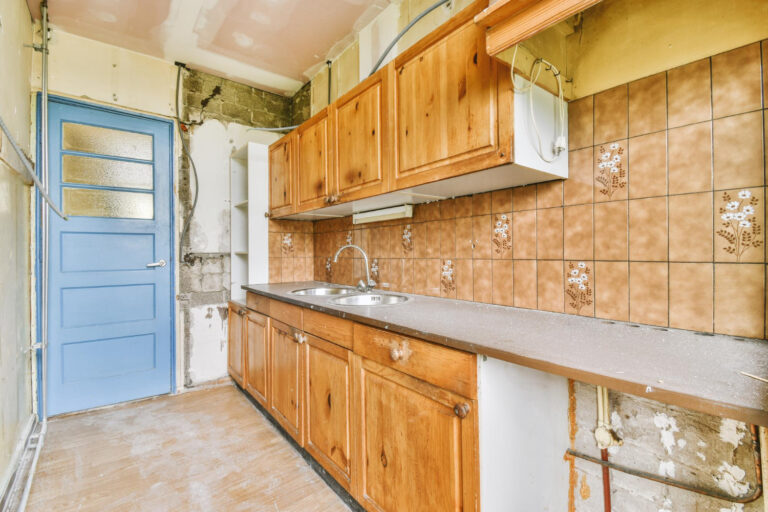
The subject of renovating an old kitchen appears in many residential units as a result of the accumulated effects of daily use on cabinets, countertops, and doors over time. Patterns of use change, the number of appliances increases or their locations are shifted, and some kitchens become less suitable for current needs. In this context, a set of kitchen renovation methods is used to reorganize the space and improve functional performance, with a focus on cabinets and doors as some of the elements most exposed to wear and damage.
The following paragraphs present a descriptive overview of key elements that can be used to understand how to renovate an old kitchen, starting from identifying the first signs of cabinet deterioration, moving through distinguishing between repair and replacement cases, and ending with a set of practical aspects that are usually considered when planning a kitchen renovation.
The importance of renovating an old kitchen
The condition of the kitchen affects the efficiency of daily use of the home, as the kitchen forms a constant hub for activities related to preparation, cleaning, and storage. In the case of an old kitchen, damaged cabinets, unstable doors, or worn surfaces can slow down daily tasks and increase the level of clutter within the space.
Renovating an old kitchen helps reset the relationship between cabinets, doors, countertops, and circulation paths, so that the kitchen elements become more in line with current usage patterns. This renovation also makes it possible to distinguish between elements that can continue after repair and elements that require full replacement, which helps distribute effort and cost according to the actual condition of each part.
Signs that the cabinets or doors need renovation
The need to renovate an old kitchen becomes clearly visible when recurring indicators appear in the cabinets and doors. These indicators can be grouped into three main categories.
Scratches and cracks in cabinets
Over time, a layer of scratches and surface marks forms on cabinet doors and fronts, and in some cases this may develop into cracks in the edges or corners. In older kitchens, differences sometimes appear between heavily damaged sections and others that are still in good condition, as a result of varying levels of use between cabinets.
Repeated deep scratches or cracking of the outer finish layer indicate a reduced ability to maintain the overall appearance and may limit the usefulness of repainting or cosmetic repairs if the core material itself is worn.
Hinge and handle problems
Weak hinges or doors sagging out of alignment are among the most noticeable signs in old cabinets. These problems are reflected in:
- Difficulty closing the door or it rubbing against the cabinet frame
- Hinges loosening repeatedly despite tightening them
- Uneven alignment between adjacent doors
As for handles, their problems appear in cracked plastic materials, discoloration of metals, or mismatched shapes as a result of partial replacements in the past. The accumulation of these indicators provides a clear picture of how far the cabinets have aged.
Stains and moisture damage
Moisture is one of the key factors in renovating an old kitchen, especially in cabinets near the sink, under the basin, or close to heat-generating appliances. Signs of moisture can be observed in:
- Swelling in parts of wooden or MDF boards
- Color changes in some areas compared with the rest of the surface
- Odors caused by accumulated moisture
Reaching this stage of damage often indicates that surface-level repair will not be sufficient, and that the kitchen needs a deeper assessment of the cabinet structure.
When is repair sufficient?
Repair refers to a set of actions aimed at improving the condition of an old kitchen without replacing all elements. Repair is closer to being an appropriate solution when:
- Internal cabinet structures are stable and show no signs of swelling or cracking
- Damage is concentrated in the paint or outer finish layer only
- Hinge problems are limited to a small number of doors
- There are no deep moisture effects that have reached the core of the material
In such cases, repair may include repainting doors, changing handles, adjusting hinges, or replacing a limited number of fronts. This type of intervention adds extra service life to the cabinets while preserving the current kitchen layout without major changes to the plan.
This type of repair is usually used when the main goal of renovating an old kitchen is to improve the overall appearance and reduce signs of wear, without moving into full-scale changes that may require more time and cost.
When is replacing doors or cabinets a better option?
In other cases, the damage is advanced enough that repair has limited impact. This can be seen in one or more of the following:
- Clear swelling in cabinet panels due to prolonged exposure to moisture
- Repeated hinge pull-out from the cabinet body because the material is weak in the fastening area
- Visible cracks in the cabinet structure itself rather than just in the outer layer
- A large mismatch between very old sections and newer ones that were partially replaced in previous periods
In such situations, renovating an old kitchen tends towards full door replacement or changing some or all cabinets. Replacement offers an opportunity to standardize façade materials, adopt modern hinge systems, and correct old issues in how cabinets were installed, leveled, or aligned. Replacement can also be linked to rethinking the horizontal or vertical distribution of cabinets, such as increasing the number of upper cabinets or allocating tall units for storage, which is difficult to achieve through repair alone.
Practical considerations for renovating an old kitchen
The process of renovating an old kitchen spans more than one aspect, and common practice shows that the focus is not on a single element but rather on a set of interconnected elements, including:
- Assessing cabinet conditions from the inside before deciding on painting or replacement
- Reviewing areas exposed directly to moisture under the sink or near the dishwasher
- Comparing the cost of partial repair with the cost of replacement in light of the expected remaining service life of the cabinets
- Studying the relationship between fixed appliances and the distribution of current doors and drawers
In some projects, renovating an old kitchen also involves updating countertops, walls, and floors in addition to cabinets and doors, so that the kitchen is treated as an integrated unit that takes into account the connection between finishes, circulation paths, and storage.
A structured description of these aspects helps form a clear picture of old kitchen renovation ideas that rely on first reading the kitchen’s condition, then arranging change priorities between repair and full or partial cabinet replacement according to the level of wear and the desired performance.
Conclusion
Assessing the condition of cabinets, doors, and countertops shows how renovating an old kitchen can be approached at multiple levels, starting with limited repairs to fronts and hinges, and extending to full replacement when damage reaches the internal structure of cabinets or they are clearly affected by moisture. This overview also clarifies that kitchen renovation is not a single fixed step, but rather a process that ranges between partial repair and comprehensive change according to the actual conditions of each kitchen.
More detailed discussion of additional aspects related to kitchen upgrades can be found in the article Kitchen renovation ideas which presents additional examples of methods used to improve residential kitchens.
Frequently asked questions
Which elements most influence the decision to renovate an old kitchen?
The decision to renovate an old kitchen is usually linked to the condition of cabinets, doors, and countertops, the level of damage caused by moisture and scratches, and how well the current layout fits daily usage needs and circulation paths inside the kitchen.
When is repair sufficient in an old kitchen?
Repair is closer to being sufficient when cabinet structures are stable, damage is limited to paint, fronts, or a small number of hinges and handles, and there are no signs of deep wear or swelling caused by moisture. In this case, partial interventions can achieve noticeable improvement within the framework of renovating an old kitchen.
In which situations is replacing cabinets preferable to repair?
Replacement becomes more likely when there are signs of panel swelling, cracks in the internal structure, repeated weakness at hinge fastening points, or a large contrast between very old and newer sections. This indicates that repair will not provide a long-term solution within a plan for how to renovate an old kitchen.
What role do internal storage solutions play in renovating an old kitchen?
Improving internal storage by adding pull-out shelves, drawer dividers, and corner utilization units is an important part of kitchen renovation methods, because it increases the efficiency of existing cabinets and reduces clutter on countertops, which reflects positively on organizing an old kitchen without always needing to increase space or cabinet count.
**
- **
- **
**
**
**
**
**
**
**
**
**
**
**
**
**
**
**