


Kitchen Countertop Materials: Comparing Marble, Quartz, and Granite

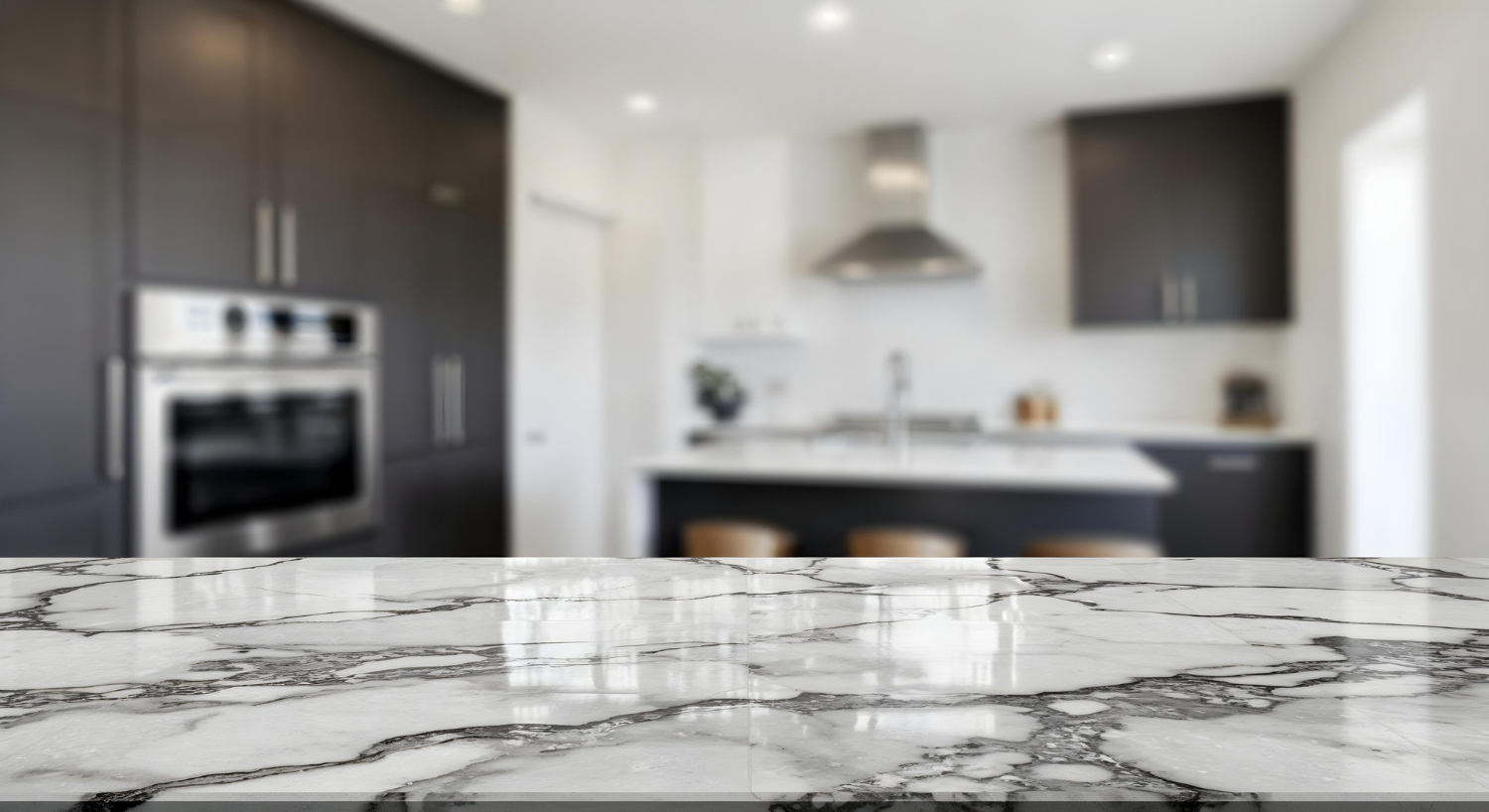
The kitchen countertop represents the main work area in residential kitchens, combining daily functionality for food preparation with a visual impact on the interior space. The materials used to implement the kitchen countertop vary between marble, quartz, granite, and other options. The differing properties of each material result in differences in durability, resistance to heat and stains, and ease of maintenance. This variety appears clearly when choosing the best countertop for the kitchen in new residential units or when renovating existing kitchens.
The comparison between a marble kitchen countertop, a granite kitchen countertop, and quartz is based on a set of indicators, including scratch resistance, level of absorption, color stability, and how each material reacts to everyday cleaning products and substances. Presenting these elements in a descriptive way helps form a clear picture of how each type of kitchen countertop performs in daily use.
Marble
Marble is used as a natural material in various finishing applications within buildings, and in some residential units it is chosen for the kitchen countertop because of its natural stone appearance and varied veining. Marble slabs are extracted from quarries, then cut and polished to form surfaces ready for installation. The article
Types of kitchen marble presents different examples of shapes and colors used in residential kitchens, and explains the main differences between types in terms of appearance and use.
A marble kitchen countertop often appears in kitchens that adopt a classic or luxurious style, and it is also used for prep islands or partial surfaces in open kitchens connected to the living space.
Advantages
- A natural look rich in veining that gives the kitchen countertop a distinctive visual character.
- A wide range of color tones that allows it to be combined with multiple kitchen cabinet and floor styles.
- The ability to shape the edges in different profiles to suit classic or modern design styles.
- The possibility of periodic polishing to restore part of the gloss if light surface scratches appear.
Disadvantages
- A higher degree of liquid absorption compared with some other materials, making the countertop more sensitive to stains if not properly sealed.
- Clear sensitivity to strong acidic substances and unsuitable cleaners when they remain on the surface for long periods.
- Lower hardness than granite, with a higher chance of scratches under heavy use without protective measures.
- The need for periodic maintenance, including resealing and sometimes polishing, to preserve the condition of the marble kitchen countertop over the long term.
Quartz
Quartz used for the kitchen countertop is an engineered material made of natural quartz particles bound with resins and color additives, formed into slabs with uniform thickness and color. This composition makes it possible to design a kitchen countertop with a consistent pattern over large areas or in repeated units within residential projects.
Advantages
- Clear uniformity in color and pattern, which helps achieve a consistent-looking kitchen countertop across the entire surface.
- High density that reduces liquid absorption compared with many natural materials and lowers the likelihood of permanent staining.
- A smooth, low-porosity surface that limits the accumulation of dirt in small crevices.
- Often does not require frequent sealing to the same degree as some natural stones, which simplifies the maintenance routine.
Disadvantages
- Relative sensitivity to very high temperatures, which requires avoiding placing extremely hot cookware directly on the countertop.
- An engineered appearance that does not reflect the random natural veining found in marble or some types of granite.
- In some price categories, the cost difference between quartz and natural materials may be limited, making the choice more dependent on appearance and usage pattern.
Granite
Granite is a natural stone composed of a mixture of minerals and is used in many residential and commercial projects. It appears prominently as a kitchen countertop because of its durability. It is characterized by a grainy texture and a variety of colors ranging from light to dark, with details that differ depending on the quarry source.
Advantages
- A high degree of hardness, which raises the level of scratch resistance under typical daily use.
- Good ability to withstand high temperatures when dealing with hot cookware.
- Wide availability on the market in multiple colors that suit different kitchen countertop design styles.
- When a granite kitchen countertop is properly sealed, an acceptable level of stain resistance can be achieved in residential kitchens.
Disadvantages
- A grainy appearance that may not suit some designs that prefer a calm, uniform countertop surface.
- Certain types with wider pores require resealing from time to time to maintain a low absorption rate.
- Higher weight compared with some engineered materials, which requires attention to how the supporting cabinets for the kitchen countertop are fixed.
Quick comparison between marble, quartz, and granite
The table below presents a descriptive comparison between the most common kitchen countertop options based on a set of key indicators:
| Factor | Marble kitchen countertop | Quartz kitchen countertop | Granite kitchen countertop |
|---|---|---|---|
| Heat resistance | Medium | Medium to good | Good to high |
| Scratch resistance | Medium | Good | Relatively high |
| Stain resistance | Medium with proper sealing | Good | Good with suitable sealing |
| Ease of maintenance | Requires sealing and polishing | Simple periodic maintenance | Moderate maintenance with periodic sealing |
| Long-term durability | Medium to good | Good to high | High |
| Approximate price range | Medium to high | Medium to high | Medium to high |
This type of comparison helps evaluate how each material performs within a single framework without favoring one as the absolute best kitchen countertop, while focusing on the characteristics of actual usage.
Guidelines for choosing the best kitchen countertop
Common practices in kitchen projects show that choosing a kitchen countertop depends on a set of practical considerations, including the intensity of daily use, the presence of children, the types of food prepared and cooking methods, and the expected level of maintenance. In high-use kitchens, surfaces with greater resistance to scratches and stains are often prioritized, while in open kitchens some homeowners tend to select materials with a stronger visual presence even if they require more care.
Lighting and the overall color scheme in the kitchen also play a role, as light or dark countertop colors interact with cabinet and floor colors to create a specific impression of the space. The layout of appliances and the movement area around them influence the required lengths of the kitchen countertop and the choice of edge profile and angle.
Conclusion
The evaluation of a kitchen countertop is affected by several technical elements, including the type of material used, resistance to heat and scratches, behavior when exposed to stains, and maintenance requirements. A marble kitchen countertop offers a natural visual presence with a greater need for care, quartz provides a dense, uniform surface, and a granite kitchen countertop offers a robust stone option with clear durability in daily use. Presenting these characteristics in a neutral comparative format allows for a more precise reading of material differences without directly favoring one type over another.
Frequently asked questions
What is the main difference between a marble kitchen countertop and a granite kitchen countertop?
The main difference lies in hardness and absorption. Marble tends to absorb liquids more and requires sealing and periodic maintenance, while granite is known for higher hardness and better scratch resistance under daily use, with sealing also needed to reduce stain absorption.
Is quartz considered the best kitchen countertop in terms of maintenance?
Quartz is an engineered material with high density and a uniform, low-porosity surface, which helps reduce liquid absorption and makes cleaning easier. For this reason, its maintenance is often classified as simpler compared with some natural materials, while still observing its limits in handling direct high heat.
Does a marble kitchen countertop get affected by strong cleaning agents?
Strong acidic cleaners can cause changes in the gloss or color of a marble kitchen countertop when used repeatedly or left on the surface for long periods. It is therefore generally preferable to use balanced cleaners and avoid leaving acidic liquids for extended times.
Is one-time sealing enough for a granite or marble kitchen countertop?
Sealing is usually applied at the time of installation, but usage patterns and cleaner types affect how long it remains effective. Resealing is thus carried out periodically according to the condition of the surface and the observed level of absorption over time, whether the countertop is made of granite or marble.