


Kitchen Layouts: A Complete Guide to L-Shape, U-Shape, and Island Designs

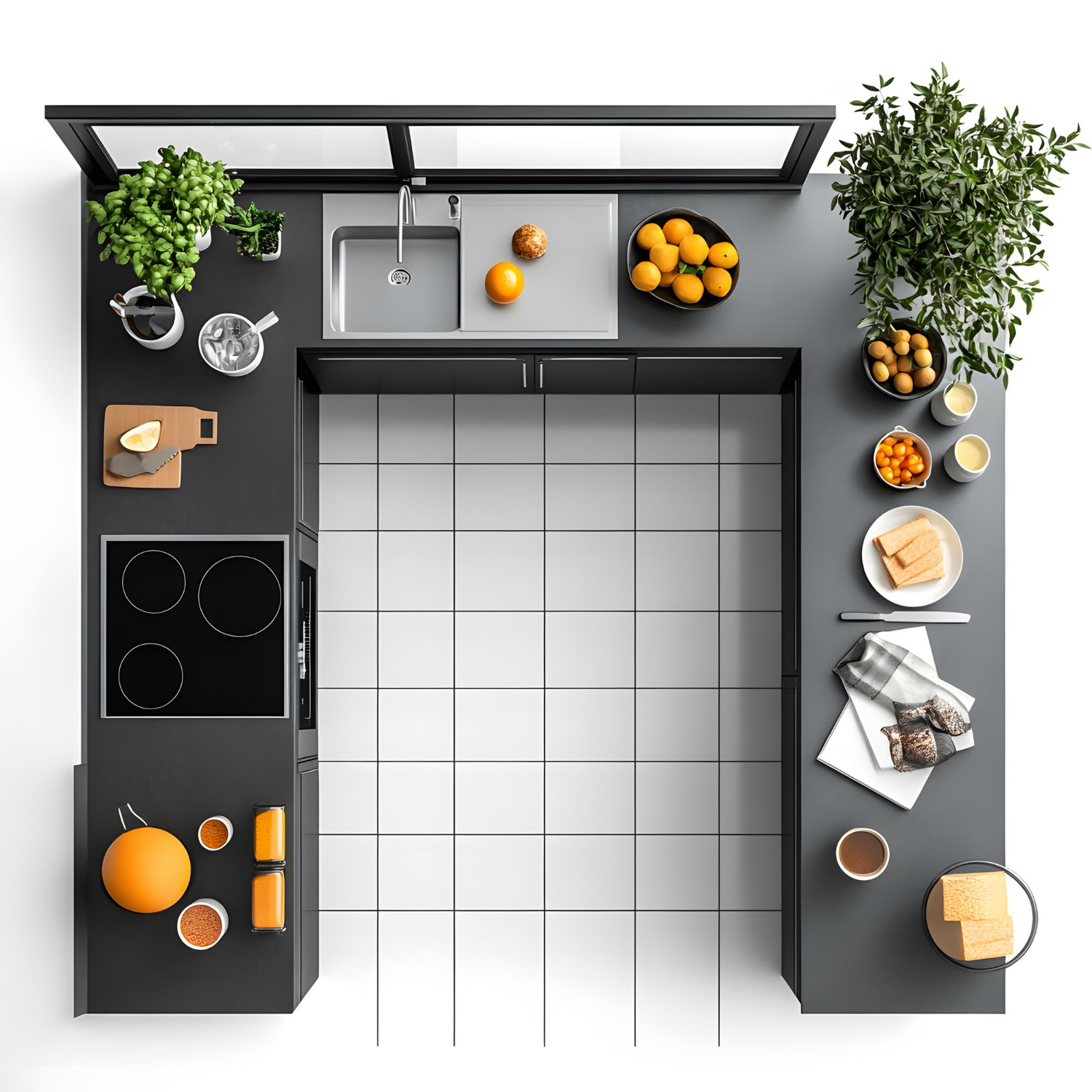
Modern residential kitchen layouts are a fundamental element in organizing the relationship between work areas and determining where food preparation, cooking, and storage take place. Kitchen planning depends on selecting kitchen layouts that are suitable for the property’s size and the nature of use, while taking into account the distribution of appliances and circulation paths to ensure spatial clarity and reduce congestion. The importance of modern kitchen layouts appears in small apartments, medium-sized units, and large villa kitchens, where the distribution of units varies according to dimensions, openings, and ventilation.
The most common types of kitchen layouts
The types of kitchen layouts vary according to the shape of the space and the boundaries of walls and entrances. The most common layouts in residential projects include the L-shape design, the U-shape design, the straight (one-wall) kitchen, and layouts that include a kitchen island. Each layout is based on a specific arrangement of cabinets, worktops, and appliances, with the ability to combine it with other principles in kitchen design such as the
kitchen work triangle which organizes the relationship between the sink, cooker, and refrigerator.
L-shape design
Advantages
- The kitchen units are distributed along two perpendicular walls, allowing the corner to be used for an additional work area or corner cabinets.
- This layout is suitable for various sizes, from small apartments to medium-sized kitchens, with the possibility of leaving the third wall open towards the living room.
- The possibility of adding a kitchen island in larger spaces to provide extra worktop and storage, making the layout close to modern open kitchen layouts connected to surrounding spaces.
Disadvantages
- Difficulties in fully utilizing the internal corner if dedicated storage solutions such as corner pull-out units are not used.
- The circulation path may become narrow if large appliances are installed on the two adjacent walls without sufficient study of the required clearances.
U-shape design
Advantages
- The user is surrounded by three walls of storage units and work surfaces, providing a wide space for food preparation and tool storage.
- The sink, cooker, and refrigerator can be distributed along the sides of the layout in line with kitchen layout standards that focus on a clear movement path.
- This layout is suitable for large and medium-sized kitchens that require a greater number of cabinets and appliances.
Disadvantages
- This layout requires enough space to provide a central circulation corridor with an appropriate width, which limits its use in narrow spaces.
- Visual connection with the living or dining rooms can be more difficult if the three walls are fully enclosed.
Straight (one-wall) kitchen
Advantages
- Kitchen units are placed along a single wall only, which makes it suitable for narrow spaces or kitchens integrated into studios and small apartments.
- Simple distribution of appliances and cabinets, which facilitates installation and maintenance work.
- Compatibility with modern open kitchen layouts, especially when combined with a dining table or a side seating area that forms an extension of the worktop.
Disadvantages
- Limited storage and preparation space compared to L-shape and U-shape layouts.
- Difficulty in applying some design standards related to movement organization, as work areas are often arranged on a single continuous line.
Kitchen island
Advantages
- Adding a central element that provides an independent work surface that can be used for cutting, preparation, or serving dishes.
- Providing additional storage units under the kitchen island, which enhances space utilization.
- The possibility of integrating the cooker or sink into the island design where structurally and technically possible, making the layout one of the most prominent modern kitchen layouts in villas and large units.
Disadvantages
- The kitchen island requires sufficient space around it to ensure clear circulation paths with minimum required widths.
- Increased complexity in extending plumbing and electrical connections when placing the sink or cooker in the island.
How to choose a layout based on kitchen size
The choice of kitchen layouts is linked to the actual size of the kitchen, the shape of the walls, and the locations of doors and windows. The following breakdown shows, in general terms, the layouts that are suitable for each size category.
Small kitchens
The straight layout or L-shape design is used in small kitchens, where distributing the units along one wall or two perpendicular walls helps reduce circulation congestion. Modern kitchen layouts in small apartments tend to integrate the kitchen with the living or dining room, using upper units to increase storage capacity.
Medium-sized kitchens
Medium-sized kitchens can accommodate various layouts such as L-shape or U-shape, with the option of adding a side table or a small island when space allows. This size enables better distribution of the three main work areas and their connection with preparation and storage zones according to established kitchen planning standards.
Large kitchens
Large kitchens often adopt the U-shape design with a kitchen island or parallel corridor layouts, where each side is dedicated to a specific set of functions such as cooking, preparation, or storage. These spaces can accommodate larger appliances and multiple storage solutions while maintaining clear movement paths.
Common mistakes in kitchen planning
Some kitchen layouts may include errors that affect efficiency of use, including:
- Placing heat-generating appliances such as the oven and cooker close to the refrigerator without considering the impact of heat on cooling performance.
- Reducing the width of circulation paths to less than the appropriate minimum, which makes it difficult to open drawers and doors at the same time.
- Neglecting the distribution of lighting points and ventilation in line with work areas, which leads to dark zones or accumulated humidity.
- Ignoring movement-organization principles between the sink, cooker, and refrigerator, despite the availability of planning solutions such as the kitchen work triangle that helps improve the distribution of these elements.
Examples of successful kitchen layouts in Saudi homes
Residential projects in the Kingdom show recurring patterns of modern kitchen layouts that are compatible with the nature of different property types. In limited-space apartments, the straight layout or L-shape layout is more prevalent, with the kitchen left open to the living room. In medium-sized villas, U-shape layouts are common, providing three sides for work and storage. In large villas and standalone houses, the use of the kitchen island increases as a central element linking the cooking area with the dining area, with finishes and materials selected to match the character of each project.
These examples can be observed in interior design case studies published on real estate and design platforms, which show different unit distributions while maintaining general principles of circulation and storage.
Conclusion
Study of kitchen layouts shows that choosing an appropriate layout depends on the shape of the space, its dimensions, and the locations of openings, in addition to the level of daily use and the number of people who share work inside the kitchen. Modern kitchen layouts, whether L-shape, U-shape, straight, or linked to a kitchen island, help organize storage, preparation, and cooking areas within clear movement paths, with the possibility of integrating other principles such as the kitchen work triangle and focused lighting to achieve a functionally integrated arrangement.
Frequently asked questions
What is the difference between a straight kitchen layout and an L-shape layout?
The straight kitchen layout places all units along a single wall, while the L-shape layout distributes them along two perpendicular walls, providing a larger work area and additional storage options.
When is the U-shape design used in residential kitchens?
The U-shape design is used in medium and large kitchens that provide three adjacent walls, allowing worktops and cabinets to be installed along all sides.
Is a kitchen island suitable for all spaces?
A kitchen island requires sufficient space around it to ensure clear circulation paths, so it is more commonly used in medium and large kitchens than in small ones.
What role do kitchen layouts play in improving storage?
Kitchen layouts organize the locations of cabinets and shelves according to use zones, helping to place cooking and preparation tools close to the work areas associated with them.
How do modern kitchen layouts help organize movement paths?
Modern kitchen layouts rely on studying the relationship between the sink, cooker, and refrigerator and the paths leading to them, using elements such as counters and islands to create stable, uncongested movement routes.