


How the Kitchen Work Triangle Shapes Modern Kitchen Functionality

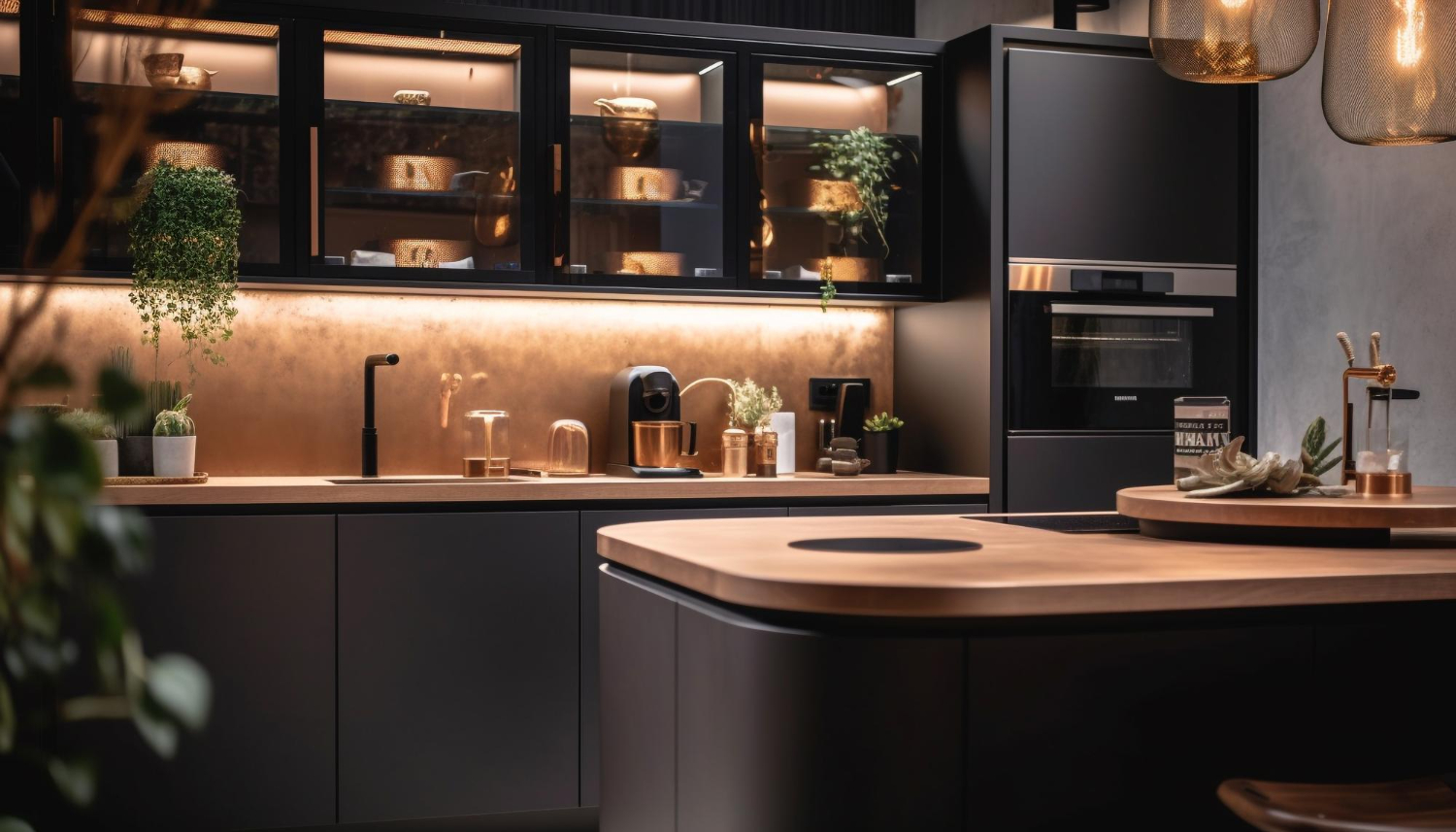
The concept of the kitchen work triangle is used in the design of residential and commercial kitchens to organize the spatial relationship between the main work areas. This concept is based on connecting three primary points with imaginary lines that form a triangle defining the movement path inside the kitchen. This layout is associated with levels of efficiency, safety, and clarity in the distribution of kitchen appliances, sinks, and storage areas. The importance of this principle appears in kitchen environments that involve frequent use of the sink, cooking range, and refrigerator, as these elements form the core of the daily cycle of food preparation. The design based on the kitchen work triangle aims to keep these elements within calculated distances that do not increase movement load and do not cause overlap between users within the space.
What is the kitchen work triangle?
The term “kitchen work triangle” refers to an imaginary geometric shape that connects three main work points:
- The sink and preparation area
- The cooking range or oven
- The refrigerator or food storage unit
These three points form the sides of a triangle that is used as a tool to assess how suitable the internal layout of the kitchen is. This layout aims to achieve a logical sequence of movement, from food storage, through preparation and washing, to cooking. The closer the distances are to the recommended ranges, the higher the efficiency of applying the kitchen work triangle within the available space.
The work triangle as a principle for organizing the sink, range, and refrigerator
The work triangle is a design standard used to measure the relationship between the locations of the main kitchen appliances. This standard is based on the following points:
- Defining the locations of the sink, cooking range, and refrigerator according to an interconnected functional order.
- Preventing the movement path from intersecting with fixed obstacles such as kitchen islands or structural columns.
- Maintaining relatively consistent distances between the sides while taking into account differences in kitchen size.
This principle is used in kitchen working drawings as part of circulation studies, alongside other elements such as door swing paths, window locations, and upper and lower storage units.
Important dimensions for kitchen design using the work triangle
The important dimensions for kitchen design using the work triangle are based on numerical ranges adopted in global design guides, with flexibility to adjust them according to the available kitchen area. The following table shows common values:
| Item | Recommended approximate value | Main layout notes |
|---|---|---|
| Distance between each two points of the triangle | From 1.2 m to 2.7 m | Avoid distances that are too short or too long |
| Total length of the three triangle sides | From 4 m to 7.9 m | Reflects the length of the full movement cycle inside the kitchen |
| Maximum length of one side | About 2.7–3 m, depending on kitchen size | Affected by corridor width and wall layout |
| Width of the circulation path in front of kitchen units | Not less than 1.0–1.2 m | Allows drawers and appliances to be opened and used clearly |
| Clearance in front of the oven or dishwasher | Not less than 1.0 m | Avoids conflict between door swing and movement |
These values are used as a general design guide when planning the kitchen work triangle, with the possibility of adjusting them according to the apartment or villa size and the number of users present in the kitchen at the same time.
The work triangle in the kitchen across different layout types
The application of the kitchen work triangle varies according to the layout of kitchen units. The following table presents some common configurations:
| Kitchen layout | Distribution of the three elements | Notes on triangle application |
|---|---|---|
| L-shaped kitchen | The sink, range, and refrigerator distributed along two adjacent walls | Allows a balanced triangle in most spaces |
| U-shaped kitchen | Elements distributed along three surrounding walls | Provides a clear triangle with a central movement path |
| Single-wall (linear) kitchen | Elements located along a single straight line | Forming a full triangle is difficult; a linear sequence is used instead |
| Galley (parallel) kitchen | Elements distributed along two opposite walls | A narrow triangle can be formed and is affected by the central corridor width |
| Kitchen with an island | Range or sink placed in the island and other elements along the wall | Requires additional calculation of movement distances around the island |
The success of applying the kitchen work triangle in these layouts depends on the location of doors and windows, and the routing of services such as ventilation, gas, and electrical connections.
The effectiveness of the kitchen work triangle is linked to several secondary factors that influence how the interior space functions, including:
- Traffic flow inside the kitchen:
Main household circulation routes are kept outside the triangle boundaries so that daily passage does not intersect with the working path inside the kitchen. - Storage areas:
Upper and lower storage units are distributed around the three work areas so that frequently used tools are stored near each area, such as cookware near the range and cutting tools near the sink. - Lighting:
General and task lighting are directed toward the work areas within the triangle. Details on suitable kitchen lighting are covered in specialized articles such as
The best lighting for the kitchen: a guide to choosing the ideal lighting. - Types of lighting fixtures:
The type of fixtures used above preparation and cooking areas contributes to clear visibility and reduced shadows. Additional details are presented in
Types of kitchen lighting: a comprehensive guide to choosing the right lighting. - Overall kitchen décor:
Organizing the kitchen according to the work triangle falls within interior design and décor, and related topics are included under
the décor section on the Aqar Blog, where different models for unit layouts, colors, and materials are presented.
The kitchen work triangle and its relation to regulatory standards
Regulatory guides in the Kingdom, such as the requirements of the Ministry of Municipal, Rural Affairs and Housing and the Saudi Building Code, address general provisions related to corridor width, kitchen ventilation, the distribution of heat-generating appliances, and gas systems. These requirements can be used when designing the kitchen work triangle to set the locations of ovens, gas cooktops, and refrigeration units in line with safety and ventilation standards. Adherence to these standards is linked to reducing potential risks inside kitchens, such as increased temperatures in specific areas or conflicts between appliances and emergency exits, doors, or windows.
Frequently asked questions about the kitchen work triangle
What is the main purpose of the kitchen work triangle?
The purpose is to organize the locations of the sink, range, and refrigerator within defined distances to create a clear movement path between the main work areas inside the kitchen.
What are common distances between the sides of the work triangle in residential kitchens?
Common values range between 1.2 m and 2.7 m for each side, with a total length of approximately 4 to 7.9 m depending on the kitchen size.
Can the kitchen work triangle be applied in very small kitchens?
In small kitchens, the principle is applied in a simplified form, and the work triangle may become a near-linear layout while maintaining a logical sequence between the refrigerator, sink, and range as much as possible.
What is the relationship between lighting and the design of the kitchen work triangle?
Lighting affects visibility within the three work areas, and it is recommended that general and task lighting cover the triangle area without leaving dark zones above worktops or around the range and sink.
Is use of the kitchen work triangle limited to residential kitchens?
The principle is used in both residential and commercial kitchens, with differences in triangle dimensions and the number of additional work zones in large kitchens such as restaurant and hotel kitchens.
Conclusion
The kitchen work triangle is one of the fundamental principles in interior space planning. It provides a clear organization of the main work areas and supports efficient movement and use. Adhering to its recommended dimensions helps improve the distribution of appliances and tools in line with modern design standards. Additional topics related to kitchen design and interior décor are available on the Aqar Blog, and recent articles and updates can be followed through Aqar’s official account on X at @aqarapp.